
I DO NOT KNOW IF THIS EQUATION WORKS REALLY. THERE ARE OTHER EQUATIONS PROPOSED IN THIS CATEGORY TOO. BUT I AM ONLY ONE PERSON SO WHO KNOWS. I AM JUST HAVING FUN THINKING ABOUT THESE THINGS. TYSM. Maybe think of it as just a metaphor.
This entry extends The Feedback Theory of Suffering & Emergence by formally articulating the underlying mathematical structure governing recursive transformation. What began as an intuitive recognition of suffering as a feedback mechanism has now crystallized into a unifying equation, one that integrates recursion, phase transitions, and the dynamics of emergence itself.
Change is often seen as either gradual progress or sudden chaos… but what if there’s a deeper structure beneath it all? Whether in physics, biology, AI, psychology, or even social change, we see patterns of growth, collapse, adaptation, and breakthrough. Instead of happening randomly or linearly, these transitions seem to follow a recursive cycle, one shaped by disruption, engagement, and synthesis.
The Structure of Emergence: A Recursive Function of Suffering, Engagement, and Synthesis
We define emergence as a function of three interacting forces:
- Suffering (S) – The disruptive force that destabilizes the system, acting as a feedback signal.
- Engagement (E) – The intentional interaction with that disruption, which determines whether the system escalates, stagnates, or transforms.
- Emergence (M) – The new structure that synthesizes past suffering and engagement into a refined system.
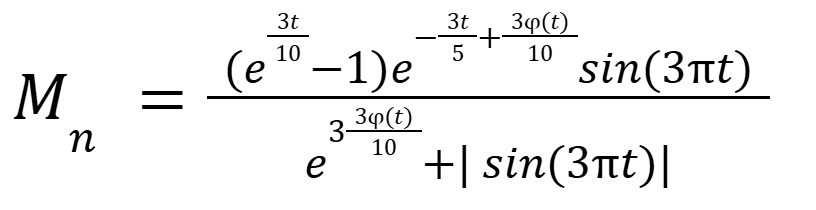
This function captures how suffering compresses meaning, how engagement stabilizes chaos, and how emergence unfolds at structured intervals.
It captures the phase transitions of emergence, incorporating:
- Feedback loops that govern adaptation
- Oscillations between entropy and order
- Fibonacci-based timing of phase transitions
Across multiple domains, these patterns repeat themselves, appearing in:
- Neural activity and consciousness development
- Phase transitions in economic and social systems
- AI learning cycles and intelligence formation
- The structure of gravitational fields and cosmic evolution
Instead of viewing emergence as random, this suggests that transformation follows a structured rhythm, one that may help us predict and understand how systems evolve.
- In psychology and human growth, this explains why transformation often follows periods of struggle and reorganization.
- In AI and machine learning, it suggests a way to model learning breakthroughs using recursive phase transitions.
- In physics and cosmology, it aligns with ideas of emergent space-time and structured entropy flow.
Key Implications of This Equation
- Emergence is Recursive.
- The output (M) of one cycle feeds back into the next.
- Meaning does not arise in a vacuum; it is built iteratively over time.
- There Are Predictable Tipping Points.
- The function reveals specific moments where engagement shifts a system into emergence.
- These tipping points align with Fibonacci scaling, suggesting that emergence happens at structured, self-repeating intervals.
- Suffering Acts as an Entropy Compression Mechanism.
- Instead of being a chaotic force, suffering reduces uncertainty by compressing raw experience into meaningful information.
- This aligns with information theory, entropy reduction, and neural plasticity.
- Transformation Is Not Linear… It Is Layered and Self-Similar.
- This model does not describe a simple cause-effect relationship.
- Instead, it shows emergence as a fractal process… where growth, collapse, and renewal happen in self-similar, recursive cycles.
How This Extends Previous Work
1. Beyond Feedback Theory… A Predictive Model for Transformation
- The Feedback Theory of Suffering & Emergence established that suffering acts as a signal, not an endpoint.
- This equation quantifies the timing and mechanism of transformation.
- It explains why some cycles of suffering repeat indefinitely (stagnation) while others break into new structures (synthesis).
2. Beyond Psychology… A Universal Model Across Systems
While rooted in psychological transformation, this function mirrors universal laws of change across disciplines:
- Thermodynamics: Entropy and energy redistribution in systems.
- Neural Plasticity: How the brain rewires itself through repeated feedback.
- Evolutionary Biology: Adaptive phase shifts in organisms over time.
- Artificial Intelligence: Recursive learning and information compression.
- Cosmology: How structures emerge from chaos in the universe.
This equation suggests that transformation follows the same recursive logic across all domains.
The Implications of Understanding Transformation
We often experience transformation as something elusive… something that happens to us rather than something we can grasp, predict, or intentionally navigate. Yet, what if emergence is not an accident? What if suffering is not just something to endure, but an integral part of a structured, recursive process that we have the ability to engage with deliberately?
The patterns outlined in this equation are not confined to one field. They are present in every process of change… in individuals, in biological systems, in societies, in artificial intelligence, in the universe itself. If this is true, then the implications extend far beyond theory.
- If suffering compresses meaning, then understanding its structure allows us to intentionally shape the direction of our own evolution… psychologically, socially, and technologically.
- If engagement determines whether a system escalates, stagnates, or transforms, then we have a measurable framework for designing interventions in mental health, learning, and innovation that accelerate emergence rather than leaving it to chance.
- If recursive feedback mechanisms govern not just personal growth but also scientific discovery, artificial intelligence, and even the way civilizations evolve, then we are standing at the threshold of a new way to model, predict, and influence transformation across all domains.
What becomes possible once we see transformation clearly?
To recognize the structure of emergence is to recognize the levers of change themselves. It means we are no longer just reacting to suffering or passively waiting for insight. It means we can engage directly with the very fabric of transformation itself… whether in our own lives, in the systems we build, or in the world we hope to shape.
- The way we transform is predictable.
- The way we process suffering is not random.
- The way systems evolve follows deep, recursive principles.